Yoga vs. Running: What to Wear for Comfort and Performance
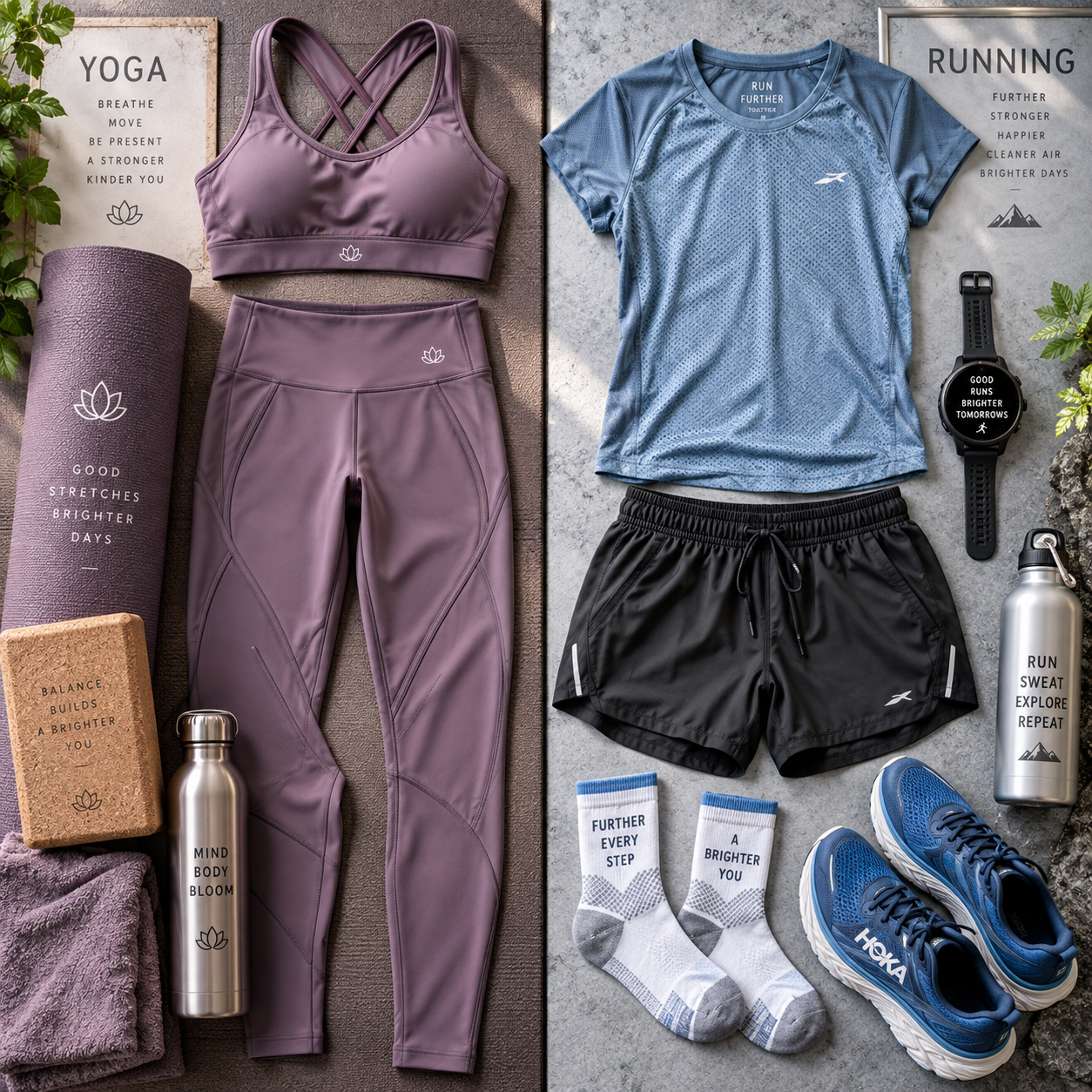
The right workout clothes should move with you, feel comfortable, and stay put through the activity. Yoga and running both call for breathable activewear, but yoga involves bending, stretching, and held poses, while running repeats higher-impact movements. That difference affects what to look for in leggings, shorts, sports bras, and layers.
Use this guide to compare the practical details before you shop. You do not need a completely separate wardrobe, but a piece that feels great in a studio may need a closer fit or more support for a run.
How yoga and running place different demands on clothing
Yoga clothing needs to allow a wide range of motion and stay comfortable in changing poses. Running clothing needs to manage repetitive movement, sweat, and bounce, so fit, support, and moisture control matter more.
In yoga, you may reach overhead, fold forward, twist, and move between standing and floor poses. A top that rides up or leggings that shift can become distracting. Stretch and range of motion are central, as is a waistband that stays secure without digging in when you bend or sit.
Running involves repeated strides and arm swings. Loose fabric can flap or rub, and a poorly fitted sports bra may feel uncomfortable over distance. Moisture-wicking fabric and breathable materials help manage sweat, while a stable fit can reduce unwanted movement. The best choice also depends on the run: a short indoor treadmill session creates different clothing needs from a long outdoor run in cool weather.
Think of the difference as a fit-and-motion check: yoga asks, “Can I bend and stretch without adjusting this?” Running asks, “Will this stay secure and comfortable through repeated steps?” Use those questions when trying on garments.
What to wear for yoga
For yoga, choose soft, flexible clothing that covers you comfortably and stays in place as you move through poses. Yoga leggings, a supportive but non-restrictive sports bra, and a top with a secure hem work well for many classes.
Yoga leggings should stretch easily and feel comfortable at the waist and knees. A high-rise waistband may provide coverage during forward folds, though rise is a personal preference. Check that the fabric feels opaque when stretched and that seams do not press uncomfortably when you kneel or sit.
For tops, look for a close-enough fit that does not fall over your face in an inversion or bunch at the waist. A fitted tank or T-shirt can be practical; a looser top may suit slower classes if it stays put. Choose a sports bra with support suited to your body and the style of yoga. Gentle classes may be comfortable in a lighter-support design, while faster sequences can call for more hold.
Class style changes the outfit calculation:
- Slow or restorative yoga: Soft layers and comfortable coverage can matter more than a compressive fit.
- Vinyasa or power yoga: Secure waistbands, tops that stay in place, and sweat-managing fabric can help through quicker transitions.
- Hot yoga: Lightweight, breathable pieces may feel more comfortable in a warm studio. Bring water and follow the studio’s clothing guidance.
There is no single correct amount of coverage. Shorts, cropped leggings, loose trousers, and long sleeves can all work if they allow movement and suit the room temperature.
What to wear for running
For running, choose breathable clothing with a secure fit, a sports bra suited to the impact level, and socks designed to stay comfortable in running shoes. Add or remove layers according to the temperature and conditions.
Running shorts are a popular warm-weather option; look for a waistband that stays put and a liner or brief that feels comfortable. If you prefer leggings, consider whether they remain secure at the waist and feel breathable at your pace. Compression leggings offer a close fit, but compression is a preference, not a requirement. A tighter garment may feel secure to one runner and restrictive to another.
Sports bra support is especially worth checking for running. Try the garment on and move naturally: the band should feel stable, the straps should not dig in, and the overall fit should not limit comfortable breathing. Support needs vary by person, so use comfort and fit rather than a label alone as your guide.
Pay attention to details that can become noticeable over repeated strides:
- Running socks: Choose a fit that does not bunch inside your shoes. Fabric and thickness should suit your shoes and personal comfort.
- Waistband fit: Test it with a few bends or steps; it should stay in place without pinching.
- Breathability: Moisture-wicking fabric can help move sweat away from the skin, but it does not guarantee you will stay dry in every condition.
- Practical features: Pockets are useful for a key or card, but check that their contents do not bounce.
For an outdoor run, consider visibility and changing weather as well as comfort. In cool conditions, lightweight layers are easier to adjust than one heavy top.
Yoga vs. running activewear: key differences
The main difference is that yoga clothing prioritizes flexible, pose-friendly comfort, while running activewear prioritizes secure support and comfort during repeated impact. Some garments can serve both, but the fit and fabric trade-offs become clearer in use.
- Fit: Yoga clothes can be close-fitting or relaxed, as long as they do not obstruct poses. Running clothes often work best when secure enough to avoid shifting or chafing.
- Stretch: Both activities benefit from stretch. Yoga puts it to work across a broad range of positions; running needs fabric that moves comfortably through repeated strides.
- Support: Yoga bras can prioritize comfort and freedom of movement. Running bras generally need more stable support for repeated movement.
- Fabric: Breathable materials and moisture-wicking fabric are useful for both. For a sweaty run or vigorous class, drying comfort may matter more than a plush feel.
- Waistband: Yoga leggings should remain comfortable when bending and sitting. Running bottoms should stay secure through motion without excessive pressure.
- Accessories: Running socks and weather-appropriate layers are more central outdoors; yoga clothing choices depend more on the studio and class style.
When comparing two similar items, try the movement each one needs to handle. Reach and fold in yoga leggings; jog in place in running shorts. A product description can explain fabric features, but a fit check tells you whether the garment works for your body.
Can you wear the same outfit for both?
Yes, many people can wear the same leggings, top, or sports bra for yoga and running, provided the pieces feel comfortable and offer enough support for each activity. The trade-off is that a versatile outfit may be less tailored to either workout.
Stretchy leggings with a secure waistband can work for both a yoga class and an easy run. A moisture-wicking top may also be useful across activities. The piece most likely to need changing is the sports bra: a low-impact style that feels comfortable for yoga may not provide the support you want while running.
Use a simple three-part check before relying on one outfit:
- Movement: Can you bend and reach without the fabric shifting or restricting you?
- Support: Does the bra feel secure enough for the higher-impact activity you plan to do?
- Conditions: Will the fabric, coverage, and layers suit the studio or outdoor weather?
If a garment passes all three, it is a reasonable cross-training option. If it fails one, changing just that piece may be enough. For example, keep the same leggings but switch to a higher-support bra and running socks for a run. Avoid assuming that compression automatically means better support or that the most versatile item is best for every session.
How to choose based on weather and personal preference
Choose workout clothes by combining the activity with the conditions and your comfort preferences. For outdoor running, use adjustable layers; for yoga, consider studio temperature, class intensity, and how much coverage helps you feel at ease.
In cool weather, start with a breathable base layer and add a lightweight top or jacket that you can remove. A hat or gloves may suit some runners, depending on conditions. Avoid dressing so heavily that you feel uncomfortable once you warm up, and check the forecast before a longer outdoor session.
In warm weather, lightweight tops and running shorts can feel less restrictive, while leggings remain a valid choice if you prefer more coverage. For indoor yoga, a light layer can help during a slower class or the final relaxation period, but you may not need it for a heated or vigorous session.
Fit is personal. Some people prefer compression leggings; others want a softer, looser feel. Seek coverage that lets you focus, and check seams, waistbands, and fabric stretch in the movements you actually do. If you are shopping online, consult the size chart and garment details, then review the return policy in case the fit is not right.
Bottom line: Match yoga clothes to stretching and pose changes; match running clothes to support, repeated movement, and weather. A small, thoughtful rotation of adaptable pieces can cover both activities without expecting one outfit to suit every workout.